
Aronia (Black Chokeberry) - Aronia melanocarpa
1. About the plant
Black chokeberry (Aronia melanocarpa) belongs to the rose family (Rosaceae) and is a medicinal plant native to north-eastern North America and southern Canada, where it grows widely in both dry and wet areas. It is a deciduous shrub reaching 1–2.5 metres in height. Systematic cultivation of aronia in Europe and Russia began after the Second World War, once the valuable medicinal and nutritional qualities of its berries had been recognised. On the international scale of medicinal plants (1–5), aronia is ranked in first place (scale 1).
2. Morphology and plant characteristics
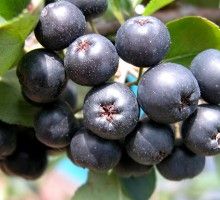
Aronia is a long-lived shrub: it develops an extensive root system and withstands very low temperatures (down to -25 °C), so it can be grown in almost every part of Greece, with the exception of very hot areas that experience frequent heatwaves of 43 °C. Apart from the main root, the roots are shallow and fine. The plant produces numerous suckers. The leaves are elliptical (2–6 cm long and 1–4 cm wide). In spring and summer the foliage is light to dark green, turning various shades in autumn (orange, rosy red, soft pink). The plant flowers in July, bearing small clusters of white flowers. The bark is brown to light black. The fruit is small (7–12 mm), round and black when ripe. In Greece it ripens from August to the second half of September. Fruit production begins in the second year of cultivation, when the plant bears its first berries, and increases year after year. From the fifth year onwards, once the plant is fully established, it reaches its maximum yield.
3. Economic importance
Aronia is grown for the production of juice and medicinal preparations, as its berries are rich in compounds such as anthocyanins, phenols, catechins and flavonols, among others.
The economic potential of aronia cultivation is considerable: growing costs are fairly low, it generates income within a short period (two to three years after planting), a plantation lasts for a long time (up to 50 years), and it lends itself to organic farming, since routine fertilising and spraying are not required (no diseases have been reported to date).
4. WHY aronia deserves a place on our table
Aronia berries are edible and flavoursome (especially once processed) and are widely used in jams, as they contain a valuable substance, pectin. The fruit can also be used by the pharmaceutical industry, as it contains high levels of vitamin C (15–30 mg per 100 g) as well as many other vitamins and trace elements (A, B1, B2, B3, B6, B9, E, K, P). The main product of aronia for sale is the berries themselves (fresh, frozen, or dried in the form of raisins). In addition, the berries can be processed into high-value products such as jams, juices, syrup, liqueur or wine. In the Balkans there are many companies producing wine from aronia berries. Aronia wine is reported to help revitalise the body and support cardiovascular health.
Aronia is regarded as a valuable species for its medicinal properties, owing to its high content of polyphenols (five times more than grapes). Extracts of aronia berries and leaves have useful antioxidant properties and can be used by the pharmaceutical industry, as they contain substances reported to have beneficial properties (anthocyanins, polyphenols, bioflavonols, tannins, histamines, serotonins, among others). Aronia preparations are available in pharmacies abroad in the form of capsules, drops and more.
5. Cultivation techniques
In general, aronia can be grown in almost all soil types, provided the soil is well drained, as the plant is sensitive to excess water. It needs only minimal pruning: formative pruning during the first three years of cultivation, followed by the maintenance pruning practised in most crops. Dead branches should also be removed so that the plant grows in brighter conditions. Aronia copes well with the demands of organic cultivation, as it is not affected by diseases and therefore needs no spraying or chemical fertilisers (only animal or plant residues, such as manure).
6. Soil and climate requirements
Aronia can be grown across a wide range of climates (dry or humid) and soils (sandy to clay, acidic, neutral or alkaline). It prefers full sun but can also thrive in partial shade. Aronia tolerates frosts down to -25 °C, but is affected by high temperatures during heatwaves (above 45 °C). Finally, it should be watered in summer, especially during the first two years after planting, preferably by drip irrigation.
7. Soil preparation and planting distances
Before planting, the plot is ploughed and rotavated. Suitable planting distances are 1.5 m between plants within the row and 2.5–4.0 m between rows. Once the rows have been marked out, planting holes 50 cm deep and 45 cm in diameter are dug.
When planting, it is advisable to mix the existing soil with leaf mould or peat to help the plant establish and grow well.
8. Fertilisation
Chemical fertilisers are not needed, as aronia is generally grown organically. However, yields increase when the soil is enriched with organic matter (manure), as this improves soil structure and composition.
9. Irrigation
Aronia is sensitive to prolonged drought and therefore needs irrigation, preferably by drip, especially during the first two years after planting and during fruit set in subsequent years, as irrigating the plantation greatly improves final yields.
10. Diseases and pests
Crop protection is not a significant issue with aronia, as the tough, thick leaf surface and the high polyphenol content of the leaves and berries provide the plant with strong natural defences. The greatest threat is wild birds, which cause damage once the berries ripen. Various methods are used to protect the crop from birds (sound deterrents, netting, scarecrows, etc.).
11. Harvesting and processing
In Greece, aronia berries are harvested by hand from August to mid-September. The berries keep fresh in cold storage at 2 °C for up to three months and are sold fresh, or they can be kept in freezers for long periods and sold frozen. In addition, once dried, the berries can be sold as raisins, keeping for at least two years without any loss of nutritional value. The berries can also be processed into high-value marketable products such as jams, juices, syrup or wine. Significant economic benefit can also come from processing aronia berry extracts into pharmaceutical ingredients.
12. Yields
At present, the area under aronia cultivation worldwide is not large, although demand for the berries and processed products is growing.
Planted at a spacing of 1.5 x 3 m, there are 160 plants per stremma (1,000 m²). Provided the necessary cultivation care is carried out (weed removal, watering during the summer, pruning out dead branches and surface application of manure that has been well rotted for at least two years), production is high after three years (when the young plants originally planted are two years old). The average fruit yield
ranges from 8–12 kg per plant, or 1,280–1,920 kg per stremma. Selling prices for aronia berries on the international market (Europe, America, Russia, etc.) are around €25/kg for fresh, €30/kg for frozen and €40–45/kg for dried berries. Juices sell for €7–8 per litre and wine for €15–30 per litre.